Source Kids Dog Tag for Business, Public, and Outdoor Uses
Explore 30 verified listings for kids dog tag options including aluminum alloy materials, die-struck processes, and waterproof finishes. Buyers can compare specifications, customization services, and pricing from manufacturers in Wuhan and other regions to find suitable ID tags for business or public applications.
Key considerations
Products List




Comprehensive Sourcing Guide
Strategic Sourcing Guide for Kids Dog Tags
Understanding Product Specifications and Material Composition
When sourcing dog tags specifically designed for children, the primary focus must shift from heavy-duty military specifications to safety, comfort, and durability. Based on the available market data, the core material composition for these items is predominantly Aluminum or Aluminum Alloy. This material choice is critical for the target demographic because it offers a lightweight profile, with observed product weights averaging around 5 grams. For a child, a tag that is too heavy can cause neck strain or discomfort during active play, making the low density of aluminum a superior choice over steel or brass alternatives.
The physical dimensions of the product vary significantly across different models, requiring precise verification before bulk ordering. The market presents a range of standard sizes, including specific model specifications such as 28x26x1.2mm, 50x29x1mm, and 50x28x0.4mm. These variations indicate that buyers must align the physical footprint of the tag with the intended use case. For instance, the thinner profile of 0.4mm may be suitable for casual wear, while the 1mm thickness might offer better resistance to deformation for active children. The shape is consistently observed as Oval or Horizontal, which are ergonomic forms that sit comfortably against the chest or neck without catching on clothing.
The manufacturing process plays a vital role in the final product quality. The dominant production method identified is Die Struck, often combined with Enamel or Epoxy finishes. This process ensures that the design is pressed into the metal, creating a durable surface that resists scratching. The finish options range from Shiny to Colorful, allowing for customization that appeals to younger users. Additionally, the back side of the tag is typically Flat, Blank, or Sandblasted, providing a clean surface for engraving personal information. It is essential to verify that the specific model selected matches the required dimensions and finish, as these attributes are not uniform across all suppliers.
Technical Standards and Functional Performance
Functional performance is a non-negotiable aspect of sourcing children's accessories, particularly those worn outdoors. The supplied data highlights specific functional attributes that buyers should prioritize. The most critical feature observed is the Waterproof capability, with some models explicitly listing "Waterproof" and "Coldproof" functions. This dual functionality ensures that the tag remains legible and intact even when exposed to rain, snow, or accidental submersion in water, which is common during outdoor play.
The application scope for these tags extends beyond simple identification. The data indicates usage in both Business and Public sectors, suggesting a versatility that can be adapted for school ID programs, sports teams, or general identification purposes. The product is designed for both Indoor and Outdoor use, reinforcing the need for robust construction. The condition of the product is listed as New, which implies that buyers should expect pristine items upon delivery, free from manufacturing defects or previous wear.
Compliance with international trade standards is also a key consideration. The Harmonized System (HS) codes associated with these products vary, with observations of 7616999000 (for aluminum articles) and 7326909000 (for other base metal articles). This distinction is crucial for importers to ensure correct tariff classification and duty calculation. Furthermore, the production type is noted as Pressed, which aligns with the die-struck manufacturing process mentioned earlier. Buyers must verify that the specific supplier's production line adheres to these standards to ensure consistency in the final product.
Cost Drivers and Pricing Dynamics
The pricing structure for kids dog tags is influenced by several variables, including material costs, customization complexity, and order volume. The observed listed price range in the market is between 0.05 and 1.2 USD per unit. This wide range suggests that the final cost is highly dependent on the level of customization and the specific finish chosen. Basic, uncolored aluminum tags will likely fall at the lower end of this spectrum, while tags featuring complex enamel work, epoxy fills, or custom plating (Gold/Silver) will command higher prices.
The Minimum Order Quantity (MOQ) is another significant cost driver. The data reveals a broad MOQ range from 1 to 10,000 units, with specific model requirements often set at 2,000 or 5,000 units. For buyers testing the market or requiring smaller batches, suppliers offering an MOQ of 1 to 100 units provide a lower barrier to entry, though the unit cost may be higher. Conversely, larger orders of 5,000 units or more typically benefit from economies of scale, reducing the per-unit cost. Buyers must balance their inventory needs against the MOQ constraints to optimize cash flow and storage costs.
Lead time and production capacity also impact the overall cost of procurement. The standard lead time observed is approximately 15 days, with a sample time of 3-5 days. Delays in the supply chain or the need for expedited production can increase costs. Additionally, the payment terms, typically T/T (Telegraphic Transfer), require buyers to manage their liquidity carefully. Understanding these financial parameters allows procurement teams to forecast total landed costs accurately and negotiate effectively with potential suppliers.
Supplier Evaluation and Service Capabilities
Selecting the right supplier is paramount for ensuring product quality and reliability. The data indicates that the majority of manufacturers are located in Wuhan, Hubei, China, a region known for its manufacturing capabilities. When evaluating suppliers, buyers should prioritize those that offer OEM (Original Equipment Manufacturer) and ODM (Original Design Manufacturer) services. This flexibility allows for customization of the tag's design, shape, and packaging to meet specific brand requirements.
The customization options available are extensive. Buyers can request specific plating (Gold/Silver), custom attachments, and tailored packing solutions. The standard export packaging includes paper boxes, while other models utilize polybags or white boxes, with quantities ranging from 1 piece per bag to 100 pieces per bag. It is essential to confirm the packaging details to ensure they meet the buyer's logistical needs and branding standards.
Quality level is another critical factor in supplier selection. The market data consistently lists the quality level as "High," but this is a general observation. Buyers must verify this claim through sample testing and quality audits. Suppliers should demonstrate a commitment to maintaining high standards through their production processes, such as the die-struck method and enamel application. Additionally, the supplier's ability to handle the specific HS codes and export documentation is vital for smooth international trade.
Quality Control and Inspection Protocols
Implementing a robust quality control (QC) protocol is essential to mitigate risks associated with mass production. Given the lightweight nature of aluminum and the potential for surface defects in enamel or epoxy finishes, visual inspection is a primary QC step. Buyers should verify that the tags are free from scratches, bubbles in the epoxy, or uneven plating. The "Sandblasted" back side should be consistent in texture, ensuring that engraving is legible and deep enough to withstand wear.
Dimensional accuracy is another area requiring strict QC. The observed standard sizes, such as 50x29x1mm or 28x26x1.2mm, must be verified against the actual product. Deviations in thickness or shape can affect the tag's fit and durability. Functional testing for waterproof and coldproof capabilities should be conducted on a sample basis to ensure the tags can withstand the intended environmental conditions. This may involve submersion tests or exposure to extreme temperatures, depending on the specific application.
The condition of the product upon arrival must also be verified. Since the product is listed as "New," any signs of damage or wear during transit should be addressed immediately. The packaging, whether it is a standard export paper box or a polybag, should be inspected for integrity to prevent damage during shipping. Establishing clear acceptance criteria and communication channels with the supplier for handling defects is crucial for maintaining product quality.
Long-Term Procurement and Market Considerations
Sourcing kids dog tags is not just a one-time transaction but a strategic relationship that requires long-term planning. The seasonal nature of the product, with applications in Spring and Autumn, suggests that buyers should align their ordering cycles with these periods to ensure availability when demand is highest. However, the versatility of the product for indoor and outdoor use means it can be a year-round item, especially for school ID programs or sports teams.
The customization aspect offers significant opportunities for brand differentiation. By leveraging the available options for shape, finish, and attachment, buyers can create unique products that stand out in the market. The ability to produce tags in various sizes (XS, S, M, L, XL) further enhances the product's adaptability for different age groups. Buyers should consider the scalability of their orders, ensuring that the supplier can handle increased volumes as the business grows.
Finally, compliance with international standards and regulations is an ongoing consideration. As trade policies and safety standards evolve, buyers must stay informed about any changes that could affect the import or sale of these products. Maintaining a relationship with a reliable supplier who is knowledgeable about these regulations will help mitigate risks and ensure a smooth supply chain. By focusing on quality, customization, and strategic planning, buyers can successfully navigate the market for kids dog tags and build a sustainable procurement strategy.
FAQs
What material is used for kids dog tags?
Kids dog tags are primarily made from Aluminum or Aluminum Alloy. This lightweight material, weighing about 5g, ensures comfort for children during active play and reduces neck strain compared to heavier metals.
Can I customize the size and shape of the tags?
Yes, customization is available for shape and dimensions. Products come in Oval or Horizontal forms with specific standard sizes like 50x29x1mm or 28x26x1.2mm to suit different needs and age groups.
What is the minimum order quantity for bulk purchases?
The minimum order quantity varies by model, ranging from 1 to 10,000 units. Specific models often require MOQs of 2,000 or 5,000 units, while smaller batches may be available from select suppliers.
How long does production take after placing an order?
The standard lead time is about 15 days for production. Sample preparation takes approximately 3 to 5 days, allowing buyers to verify quality before committing to a full manufacturing run.
Are the tags suitable for outdoor and wet conditions?
Yes, the tags feature waterproof and coldproof functions for outdoor use. They are designed to remain legible and intact when exposed to rain, snow, or accidental submersion during active play.
What finish options are available for the dog tags?
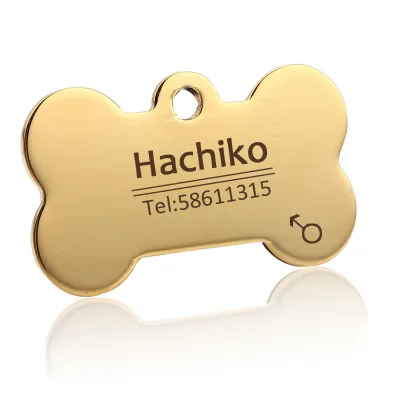
Finish options include Shiny, Colorful, and plating in Gold or Silver. The manufacturing process uses Die Struck techniques with Enamel or Epoxy to create durable, scratch-resistant surfaces appealing to children.
Where are these products manufactured and shipped from?
Products are manufactured in Wuhan, Hubei, China. The origin is confirmed as China, with standard export packaging provided to ensure safe delivery of the new condition items to buyers.